
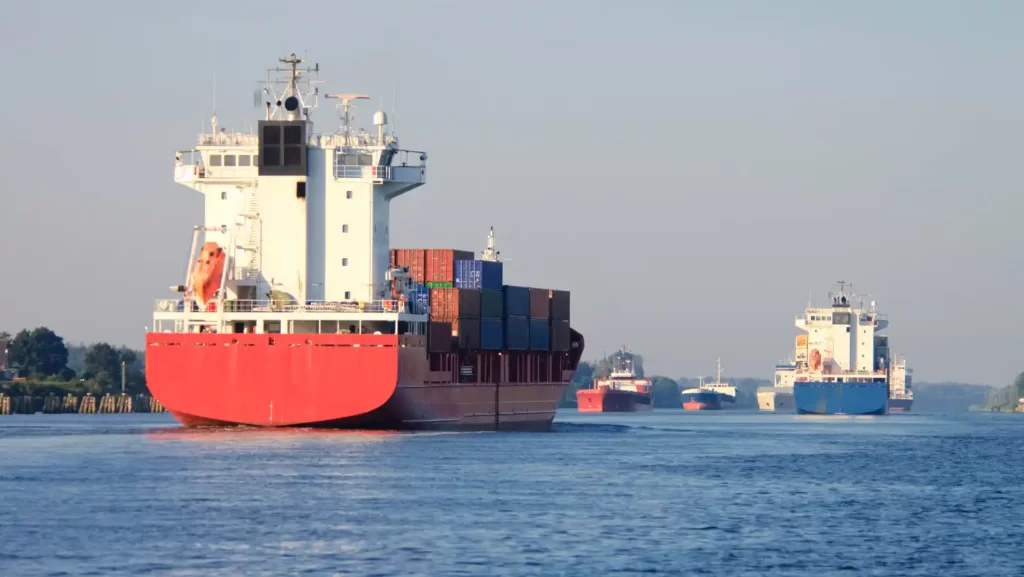
With a strong emphasis on global perspectives, sustainability, and modern shipping technologies, the course is ideal for those who wish to advance their professional expertise, enhance their employability, or progress to higher education and specialised maritime certifications.
Course Overview
Duration & Credits: Three years; 360 credits.
Structure: Divided into three stages / years:
Year 1 – Foundation (120 credits)
Year 2 – Intermediate (120 credits)
Year 3 – Advanced (120 credits)
Units: 36 mandatory units spread across all three years.
Delivery: Can be offered online, in person, or blended
Course Entry Requirements
To enroll in this Level 6 Diploma, a learner must satisfy:
Minimum Age: At least 18 years old at time of registration.
Educational Background: A recognised Level 3 qualification (or equivalent) in engineering, physics, marine studies, or a related technical discipline. Those without formal qualifications may be considered if they show strong technical aptitude or prior exposure.
Professional Experience Pathway: Experienced professionals with ~6 years of relevant work experience in marine engineering, naval operations, offshore engineering, or related industries may qualify via a “professional experience route.”
English Proficiency: Candidates must demonstrate written and spoken English competence. Proof may be through prior education in English or a recognised English-language qualification.
Additional Requirements: Access to required learning resources (digital / physical), ability to use necessary platforms/tools, commitment to both theory and practical / applied work.
Study Units (Module Breakdown)
Here are the 36 mandatory units, by year:
Year 1 – Foundation
Principles of Marine and Naval Engineering
Engineering Mathematics
Fundamentals of Mechanical and Electrical Engineering
Materials Science and Engineering
Engineering Drawing and Computer-Aided Design (CAD)
Introduction to Fluid Mechanics and Hydrodynamics
Basics of Marine Propulsion Systems
Naval Architecture – Fundamentals
Marine Structures and Ship Construction
Health, Safety, and Environmental Practices in Maritime Engineering
Communication and Technical Report Writing
Introduction to Project Management in Engineering
Year 2 – Intermediate
Marine Hydrodynamics and Stability
Marine Propulsion and Power Systems
Structural Analysis and Ship Design
Offshore and Coastal Engineering – Fundamentals
Marine Electrical and Control Systems
Materials and Corrosion in Marine Environments
Marine Maintenance and Reliability Engineering
Computational Methods in Naval Architecture
Sustainable Maritime Engineering and Green Technologies
Applied Research Methods in Marine Engineering
Port and Harbour Engineering – Basics
Project Planning and Marine Operations Management
Year 3 – Advanced
Advanced Ship Design and Modelling
Advanced Propulsion and Power Plant Systems
Offshore Structures and Subsea Engineering
Advanced Hydrodynamics and Computational Fluid Dynamics (CFD)
Naval Defence Systems and Military Applications
Smart Marine Technologies and Industry 4.0
Robotics and Autonomous Systems in Maritime Engineering
Cyber-Physical Systems and IoT in Marine Engineering
Professional Ethics and Sustainability in Marine & Naval Engineering
Innovation and Entrepreneurship in Marine Technology
Infrastructure and Facility Planning for Maritime Systems
Final Year Major Project (Capstone Project)
Learning Outcomes
Graduates of this diploma will be able to:
Understand and apply core principles of marine and naval engineering such as ship design, hydrodynamics, propulsion, stability, materials, etc.
Use mathematical, computational, and engineering tools (e.g. CAD, CFD) to model, analyse, and design maritime structures and systems.
Evaluate and select materials and systems resistant to marine environments and corrosion; apply sustainable practices.
Plan, manage, and supervise engineering projects and operations, including aspects of safety, environmental compliance, reliability, and maintenance.
Engage with emerging technologies such as robotics, autonomous systems, IoT, cyber-physical systems, and apply these in marine applications.
Demonstrate strong communication skills (technical reports, presentations), ethical judgement, entrepreneurship, innovation.
Complete a major capstone project integrating multiple disciplines.
Course Benefits
Some of the advantages students can expect:
Comprehensive Skillset: Both theoretical depth and practical/technical skills (e.g. design, simulation, applied research).
Industry Relevance: Covers state-of-the-art topics, including sustainability, automation, defence systems, smart technologies.
Multiple Entry Routes: Suitable for fresh entrants and seasoned professionals (through professional experience recognition).
Flexibility in Learning: Delivered via in-person, online or blended formats (depending on centre).
Strong Employability: Graduates emerge ready for roles in shipyards, naval defence, offshore energy, port operations, subsea engineering, etc.
Credentials & Recognition: 360 credits Level 6 qualification, aligned with global marine engineering/defence/offshore industries.
Future Progression and Qualification Routes
After completing this diploma, learners may pursue:
Professional Certifications: In marine systems, naval architecture, maritime safety, propulsion, etc.
Memberships in Professional Bodies: Engineering councils, maritime and naval associations, which can enhance credibility and access to senior roles.
Advanced/specialist training: e.g. in offshore structures, subsea systems, autonomous maritime systems, etc.
Further academic study: Possibility to transition into bachelor’s or even master’s degree programmes (depending on institution agreement), especially in naval architecture, marine engineering, maritime technology.
Senior / managerial roles: With technical leadership, supervisory, systems‐management, operations management roles in marine/offshore/naval companies or shipyards.
Qualification Route
There are two main routes to achieving the qualification:
Standard Full Training Route
For learners without prior experience: complete the full three-year, 36-unit programme, with all assessments, projects, and learning outcomes.
Experienced Professional / Recognition of Prior Learning (RPL) Route
For candidates with significant prior work experience (about 6 years) in marine/naval/offshore fields; submit evidence (portfolio, work records) showing their competence in relevant areas.
There may be a skills gap assessment to identify units/areas needing additional study. Learners may be exempted from parts of programme based on their documented experience.
Conclusion
The ICTQual AB Level 6 International Diploma in Marine & Naval Engineering is a well-rounded programme designed for both newcomers and professionals who want to deepen or formalize their expertise in marine and naval engineering. Its mix of core foundations, intermediate and advanced modules ensures learners build from basics up to cutting-edge technologies and leadership skills. For anyone aiming for a robust technical career in shipbuilding, offshore structures, naval defence, or maritime operations, this diploma offers a strong pathway with good prospects for further study and professional advancement.